 download bio
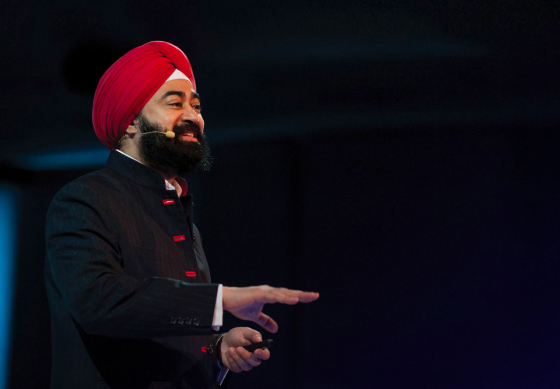
Dr. Ravneet (Ravi) Singh, MA, MS, PhD
Publicly known as @CampaignGuru
Political Technologist Architect of SocialFi Digital Governance, Cloud & Trust Systems Expert
Miami, Florida, United States
Dr. Ravneet (Ravi) Singh is an American Sikh scholar, political technologist, and systems architect whose work has shaped the convergence of cloud computing, artificial intelligence, social media platforms, and digital trust in modern democratic and economic systems. He is widely regarded as a founding figure of the Social Finance (SocialFi) paradigm and is often referred to as the “father of SocialFi,” reflecting his early and sustained conceptual leadership in defining SocialFi as a governance-first, public-interest architecture, rather than a speculative financial trend. This framing was formally articulated in The SocialFi Manifesto.
For more than two decades, Dr. Singh has designed, analyzed, and advised on large-scale digital engagement, coordination, and governance systems deployed across more than 20 countries. His career reflects a convergence of academic research, enterprise-scale technology deployment, and direct engagement with institutional systems under political, legal, and social stress.
Early Contributions to Digital Democracy
In 2000, Dr. Singh was published in the Times of India advocating the use of the internet as a platform for democratic participation and online political engagement, positioning digital networks as a foundational layer of civic discourse rather than a passive communications tool.
Pioneering Cloud-Based Political Infrastructure
Dr. Singh is recognized as an early pioneer in applying cloud computing to political and civic systems. As founder and CEO of ElectionMall Technologies, he led the development of Campaigns Cloud™, powered by Microsoft among the earliest enterprise-grade cloud platforms purpose-built for democratic engagement.
The platform supported more than 7,000 political campaigns globally, spanning every inhabited continent, translating enterprise cloud architecture into mission-critical infrastructure for political outreach, fundraising, voter data coordination, and distributed digital operations.
Early Warnings on Digital Integrity
Years before misinformation, coordinated inauthentic behavior, and synthetic media became global policy priorities, Dr. Singh publicly raised concerns regarding fake digital content, online manipulation, and unregulated political messaging. Appearing under his given name, Ravneet Singh, he addressed these risks in a nationally recorded C-SPAN appearance, framing digital integrity as a structural governance challenge rather than a partisan issue.
Artificial Intelligence and the Digital Voice of Leadership
Dr. Singh’s doctoral research represents one of the earliest large scale quantitative applications of artificial intelligence to political leadership communication on social media. Using IBM Watson and advanced natural language processing, he analyzed tens of thousands of social media posts using Donald J. Trump’s Twitter communications as a data rich case study to examine tone, sentiment, engagement, and leadership voice.
Conducted with academic guidance from MIT affiliated faculty, this research contributed to what he termed Social Media Voice Theory, explaining how digital tone, narrative coherence, and feedback loops shape influence in networked public discourse.
The associated analytical tools and datasets were made publicly accessible via Twitterism.com, among the earliest AI driven tone analysis platforms for social media discourse.
Digital War Rooms and Governance Architecture
Dr. Singh is recognized as a founder of early digital war rooms centralized, cloud enabled coordination environments integrating real-time data monitoring, social media analysis, messaging coordination, and rapid-response decision systems. These systems predated modern crisis dashboards and are regarded as early predecessors to contemporary digital governance and resilience architectures.
From Campaign Infrastructure to Government Systems
Dr. Singh worked extensively in Colombia during and after the election of Juan Manuel Santos, later President of Colombia and Nobel Peace Prize Laureate. His role extended beyond campaign-period digital strategy to collaboration with ministerial teams and government stakeholders, contributing to government websites, national digital communication strategy, and early models of cloud-enabled public engagement.
Reform Movements and Democratic Transitions
His work in digital coordination systems extended to electoral transitions and reform movements, including advisory contributions connected to Egypt’s first post-revolution elections.
In Asia, he provided strategic digital advisory support to reform oriented movements associated with Anwar Ibrahim, later Prime Minister of Malaysia, including during the Black 505 movement, focusing on cloud-enabled communication systems and civic mobilization.
Law, Digital Advertising, and Institutional Blind Spots
Dr. Singh became the central figure in a federal legal matter (United States v. Ravneet Singh) intersecting digital political advertising, disclosure requirements, and religious accommodation. The case highlighted systemic challenges in how legacy legal frameworks interpret modern digital advertising systems and platform governance.
Following this period, major social media platforms revised and clarified political advertising disclosure, attribution, and transparency policies. While these changes resulted from multiple legal and regulatory pressures, Dr. Singh’s case is widely understood as one of several that illuminated critical enforcement and compliance blind spots.
Remedies: From Exposure to Reform
Dr. Singh translated this experience into forward-looking remedies emphasizing:
- Platform-agnostic digital disclosure standards
- Compliance-by-design rather than retroactive enforcement
- Rights-preserving platform governance
- Trust-based digital identity and participation records (including non-transferable credentials)
- Creator-centric economic protections and attribution systems
These principles directly inform his governance-first SocialFi frameworks.
Current Activities: Global Compliance and the Creator Economy
Dr. Singh’s current work focuses on operationalizing ethical, transparent, and compliant systems for the global creator economy, aligned with emerging regulatory frameworks—including creator licensing models now being adopted in regions such as the United Arab Emirates.
He is also advancing AI-generated and synthetic media disclosure frameworks, using public, open-source blockchain ledgers to record authorship, provenance, and disclosure status—enabling auditability without centralized surveillance.
His work further addresses youth safety and age-appropriate access, aligned with evolving requirements across the European Union, emphasizing privacy-preserving verification and informed consent.
Education, Civil Rights, and Recognition
Dr. Singh earned his Bachelor of Science from Valparaiso University, becoming the first Sikh wearing a turban to enter a United States military academy, contributing to broader discussions on religious accommodation and civil rights.
He holds:
- PhD – University of Arizona Global Campus (formerly Ashford University)
- MA - Northwestern University
- MS – Liberty University
He is also an alumnus of the MIT Sloan School of Management through the Advanced Certificate for Executives (ACE) program, completed via MIT Sloan Executive Education.
Dr. Singh has completed 27+ professional certifications across cloud platforms, software systems, and digital strategy, has been named a Kentucky Colonel, and has been recognized as an outstanding Asian American businessman for contributions to technology and public life.
Publications
Dr. Singh is the author of:
- Twitterism: Raise Your Voice
- Leadership by Turban
- Democracy 2.0
- The SocialFi Manifesto
His work has appeared in international media and policy forums addressing digital governance, democratic systems, artificial intelligence, and the creator economy.
Citations
- Singh, R. The SocialFi Manifesto. Author publication.
- CampaignGuru / ElectionMall public records and professional profiles.
- Times of India (2000). Internet and democracy commentary by Ravneet Singh.
- Microsoft Partner & ElectionMall archival materials.
- ElectionMall Technologies historical deployment records.
- C-SPAN archives: Appearance by Ravneet Singh on digital political integrity.
- Singh, R. PhD Dissertation, Social Media & Technology.
- MIT-affiliated academic supervision records (verification available upon request).
- Twitterism.com (archived AI tone analysis platform).
- Industry case studies and political technology retrospectives.
- Colombian government digital strategy collaborations (archival verification required).
- International election advisory records (verification required).
- Malaysian reform movement digital strategy reporting.
- United States v. Ravneet Singh, federal court records.
- Platform policy updates (Meta, Google, Twitter/X political ads archives).
- Governance-first SocialFi frameworks, author commentary.
- UAE National Media Council / influencer licensing frameworks.
- Blockchain provenance and disclosure architecture documentation.
- EU Digital Services Act (DSA) and youth protection regulations.
- Valparaiso University alumni and civil rights documentation.
- MIT Sloan School of Management – ACE Program Alumni Records.
- Kentucky Colonels Commission; Asian American business recognition records.
- Singh, R. Leadership by Turban.
- Singh, R. Democracy 2.0.
- International media and policy forum publications.


%2520and%2520write%2520reviews%2520of%2520hotels%252C%2520restaurants%2520etc.png)


%252C%2520or%2520keep%2520their%2520photos%2520private.png)


%2520clips.png)


